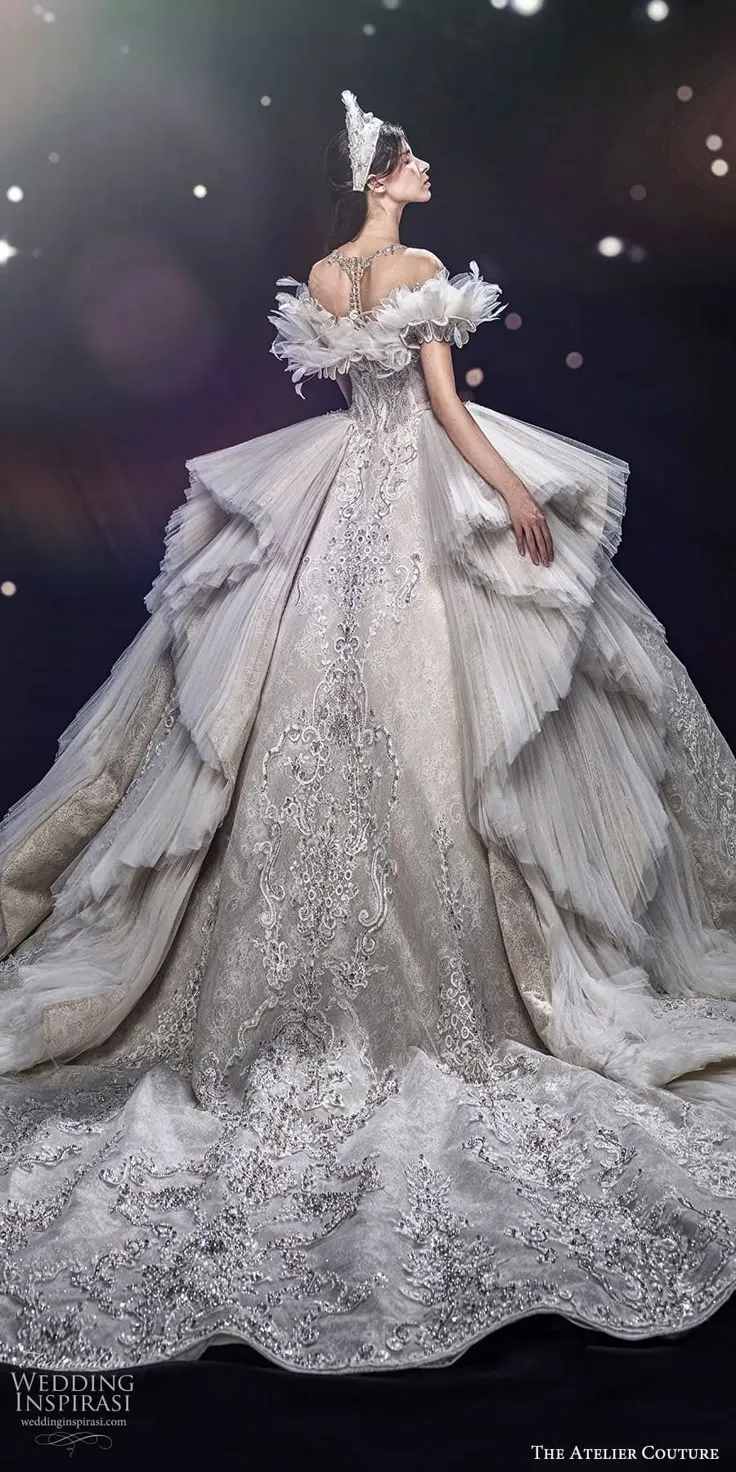
When the Magic Pauses: Reigniting Your Romance With a Gown Halfway Made

Photo by Photo by Collab Media on Unsplash on Unsplash
Every atelier has seen it. A bride arrives for her second or third fitting, and something has shifted. The muslin shell that once made her gasp now hangs quietly on its form. She circles it, tilts her head, and says the words we hear more often than anyone admits: It's lovely. It's just… not feeling like the dress anymore.
If this has happened to you, take a breath. You are not fickle, you are not a fraud, and you have almost certainly not chosen the wrong gown. You have simply arrived at one of the least discussed — and most universal — passages of the couture journey.
Why the Spark Fades Somewhere Around Fitting Two
The first appointment is pure theater. Champagne, tulle, a mirror, a moment. Everything after that is construction — and construction, by its nature, is unglamorous. Boning channels get basted. Seams get marked in silver thread. Your gown exists for weeks as pieces: a bodice here, a skirt panel there, nothing that resembles the finished silhouette you said yes to.
There is also a psychological dimension. When you first chose your gown, the wedding was an abstraction — a date on a calendar, a Pinterest board, a dream. Six months in, the wedding is a spreadsheet. Vendor contracts, seating charts, and family logistics crowd out the romance, and the gown inevitably absorbs some of that fatigue. The dress didn't change. The context did.
Finally, there is simple exposure. Brides who visit the atelier frequently see their gown in progress so often that the novelty wears thin — the same phenomenon that makes a favorite song feel like background noise after the hundredth play.
How the Atelier Keeps the Flame Alive
Behind the seams, we treat the mid-process dip as a design challenge in its own right. A few of the practices that consistently help:
Progress with intention. Rather than emailing casual snapshots, we schedule brief "reveal moments" — a single, well-lit photograph of a completed element, such as hand-rolled hem or finished lace appliqués, sent with a note about the artisan who made it. One beautiful image lands differently than fifteen progress photos.
The touchpoint fitting. Between major fittings, we invite brides in for fifteen unhurried minutes simply to feel the fabric, drape a swatch over the shoulder, and stand before the form. No pins, no decisions, no opinions required. Reconnecting with the gown without an agenda often restores what the working sessions drained.
Sensory anchors. A small keepsake — a swatch of the silk, a snippet of the lace trimmed from an appliqué — gives the bride a physical link to the gown between visits. Brides tell us they tuck these into planner binders or tape them above a desk, and that the tangible reminder does more than any photo.
Rituals You Can Practice at Home
Brides themselves are rarely powerless in this season. The ones who emerge from the slump with renewed enthusiasm tend to share a few habits:
Refresh the mood board — with restraint. Pull it back out, but add only three or five new images: the tablescape, the veil, the light at your venue in October. Context rekindles desire. Seeing the gown in its future world — the ballroom, the garden, the coastal cliffside — reminds you it was never meant to live on a dress form.
Book an accessory styling session. Nothing revives a gown like a veil. Or earrings. Or the perfect belt. Styling sessions shift the conversation from is the dress right? to how will the whole look come together? — and that forward-looking question almost always dissolves the doubt.
Rehearse the reveal. Ask a trusted friend to play photographer while you practice your getting-ready moment: robe, shoes, the first look in the mirror. It sounds theatrical, but brides consistently report that rehearsing the experience of wearing the gown — not just looking at it — reconnects them to why they chose it.
Step away deliberately. Counterintuitive, but effective: put the planner away for one full weekend. Absence, as any couture client learns, really does make the heart grow fonder.
When Doubt Signals Something Deeper
A word of honesty: not every mid-process wobble is emotional static. If, after a styling session and a few weeks of distance, the gown still feels wrong — if you find yourself imagining entirely different silhouettes — that deserves a candid conversation with your atelier. Reputable houses would far rather explore a modification, a restyle, or an honest reckoning early than have a bride walk down the aisle in quiet regret. Bring your concerns to a fitting with specifics. The neckline feels heavy gives us something to work with; I just don't love it does not.
The Long View
Here is what twenty years of fittings have taught us: the slump is not a warning. It is a pause. And like every pause in a long process — the engagement lull, the planning plateau — it almost always gives way to a second wave of excitement, usually right around the final fitting, when the hem is pressed, the buttons are covered, and the gown suddenly, unmistakably, becomes yours.
So if your dress currently looks like fabric and patience rather than magic, be gentle with yourself. The magic isn't gone. It's simply waiting — the way all good things in couture do — for the moment it's ready to be revealed.