Beyond the Preservation Box: Giving Your Couture Gown a Second Act

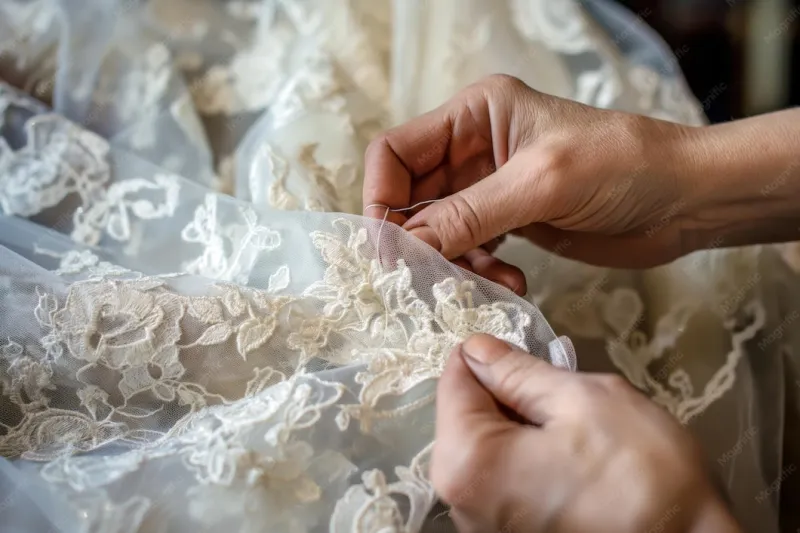
Photo by Photo by Collab Media on Unsplash on Unsplash
There is a moment, usually sometime in the week after the honeymoon, when the question arrives. It comes quietly, often while unpacking: what now? The gown that consumed months of fittings, four rounds of pinning, and a not-insignificant portion of the budget hangs in its garment bag, and the bride must decide whether it becomes an heirloom, a memory, or something else entirely.
At Mia Bridal Couture, we have watched that decision evolve. A decade ago, preservation was the default — the gown sealed in an acid-free box, tucked into a closet in Scottsdale or Scarsdale, opened perhaps once a generation. Today, more brides are asking whether their dress deserves a second life rather than a long sleep.
The Case Against the Box
Preservation has its virtues, and we would never dismiss it outright. For gowns carrying genuine heirloom fabric — a grandmother's lace panel, a mother's buttons — archival storage is an act of stewardship. But for many modern gowns, the box is less a shrine than a compromise. Silk yellows even in controlled environments. Boxes are opened rarely, if ever. And a dress built to be seen becomes, quite literally, unseen.
"We're seeing a real shift in how brides talk about the afterlife of their gowns," notes our lead couturier. "They want the dress to keep moving. They want it to matter beyond one night."
The Resale Renaissance
The American bridal resale market has matured into something genuinely sophisticated. Platforms dedicated to pre-owned couture now command serious prices for well-maintained designer gowns, and brides in Austin, Nashville, and Brooklyn routinely recoup a meaningful share of their investment — sometimes half, sometimes more.
Consider the bride who purchased a hand-beaded trumpet gown for her Charleston wedding, then listed it eleven weeks later with professional photographs and a candid account of the fit. It sold to a bride in Denver within a month. Two weddings, one dress, and a conversation between strangers who never met.
Our guidance for resale is simple: have the gown professionally cleaned within weeks of the wedding, document any alterations honestly, and keep the original receipts. Provenance matters to the second bride as much as the first.
Donation With Dignity
Across the country, organizations collect gowns for brides who could not otherwise afford them — military brides, hospital-wedding programs, community dress drives. A gown donated in good condition can carry someone through a day they will remember forever.
The key is condition. A donation should be a gift, not a disposal. Gowns with staining, missing beads, or heavy alterations are better directed toward repurposing than passed along.
Deconstruction: The Atelier's Art
The most quietly radical option is transformation. In our own studio, we have taken reception-worn gowns and reimagined them as eveningwear — a corseted bodice reborn over trousers, a cathedral train reduced to a cocktail-length skirt suitable for anniversaries and galas.
Deconstruction is not for every dress. Heavily beaded or corseted gowns resist easy reworking, and the process is not inexpensive. But when it succeeds, the result is singular: a garment with a wedding inside it, worn into new rooms and new decades.
"We start by asking what the bride loved about the dress," our patternmaker explains. "The neckline, the movement, the way the light caught the organza. We keep that. We let the rest go."
Choosing Before the Wedding
Our strongest recommendation is to decide before the big day, not after. Brides who know the gown will be resold treat it differently during the reception — mindful of red wine, mindful of the hem. Brides planning deconstruction can tell their seamstress early, allowing the initial construction to anticipate the second act.
A gown is the most significant garment most women will ever own. Whether it becomes an heirloom, another bride's dream, or a jacket worn to a tenth-anniversary dinner, the choice deserves the same care that went into saying yes.
The last dance ends. The dress, with intention, does not have to.