What Ten Thousand Dollars Buys: Opening the Ledger on a Made-to-Measure Gown
The first question most brides ask in a couture consultation is what a gown costs. The more useful question, and the one that tends to arrive two appointments later, is what the cost is made of. A made-to-measure gown is not a retail garment with a romantic surcharge attached. It is a small, temporary manufacturing operation conducted for a single client, and the price tag is best read as a ledger rather than a label.
What follows is an honest reading of that ledger, written from inside an atelier rather than from a spreadsheet.
The Cloth Line
Fabric in a couture gown is rarely the largest single expense, which surprises nearly everyone. It is, however, the line most brides fixate on, and reasonably so: cloth is the only part of the gown a bride can touch before the work begins. A bolt of fine silk mikado, a length of French lace with a hand-worked corded edge, or a duchesse satin that behaves in cold weather all carry prices that move sharply with width and origin. Two gowns of identical silhouette can differ by fifteen hundred dollars purely on the mill that wove the cloth.
The practical point is this: fabric is quantifiable. Ask to see the yardage in the estimate. A reputable atelier will tell you how many yards the design requires, what the mill charges, and whether a second-choice cloth would materially change the result.
The Toile You Will Never Wear
Before a single inch of silk is cut, most couture commissions are built in muslin. The toile is a working garment — pinned, marked, slashed, and frequently rebuilt — that exists so the final cloth is cut once. It consumes pattern paper, unbleached cotton, atelier hours, and at least one appointment that produces nothing a bride can photograph.
Brides occasionally ask whether the toile can be skipped to save money. It can, and in our experience it should not, particularly for any gown with a bias-cut skirt, a structured bodice, or a bride whose measurements are likely to shift during a twelve-month engagement. The toile is insurance purchased before the risk arrives.
Hours, Not Yards
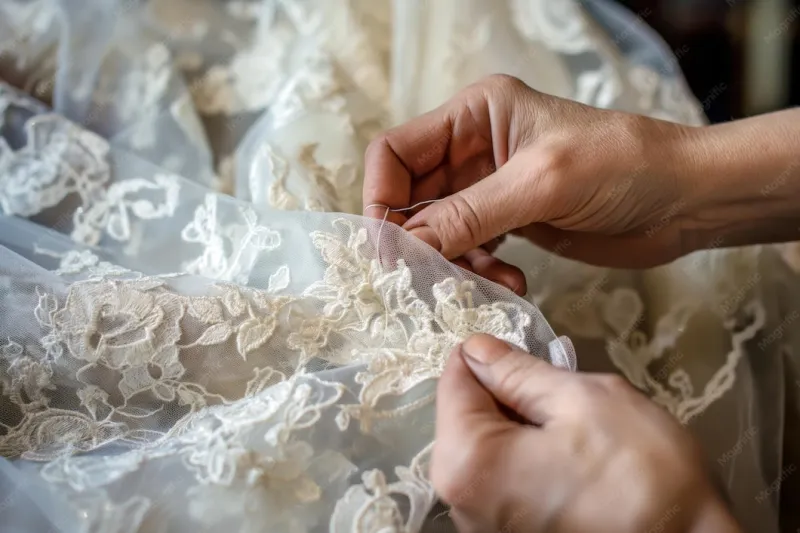
The largest line in any couture estimate is labor, and labor in a bridal atelier is slow by design. Hand-finishing an enclosed seam, setting a lace motif so the pattern flows across a seamline, weighting a hem so it falls correctly on the bias, binding a bodice edge so it lies flat against the skin — each of these is measured in hours, not minutes. A single hand-rolled hem can occupy a full working day.
This is where the price of a gown and the price of a dress diverge most sharply. Two gowns may look alike on a hanger. One was closed with a machine and pressed flat. The other was closed by hand and moves differently because of it.
The Fittings Are the Garment
A common misconception holds that fittings are a service included around the edges of the purchase. In couture, the fittings are the purchase. Two, three, sometimes four sessions of an hour or more, each requiring a fitting-room block, a seamstress, a first hand, and a schedule that keeps a bride from seeing another client's commission.
An atelier that offers unlimited fittings at no charge is not being generous; it has priced them in already. What matters is not the count but the practice. Ask how many fittings the estimate assumes, and what happens to the cost if a gown requires more.
The Pattern That Retires With You
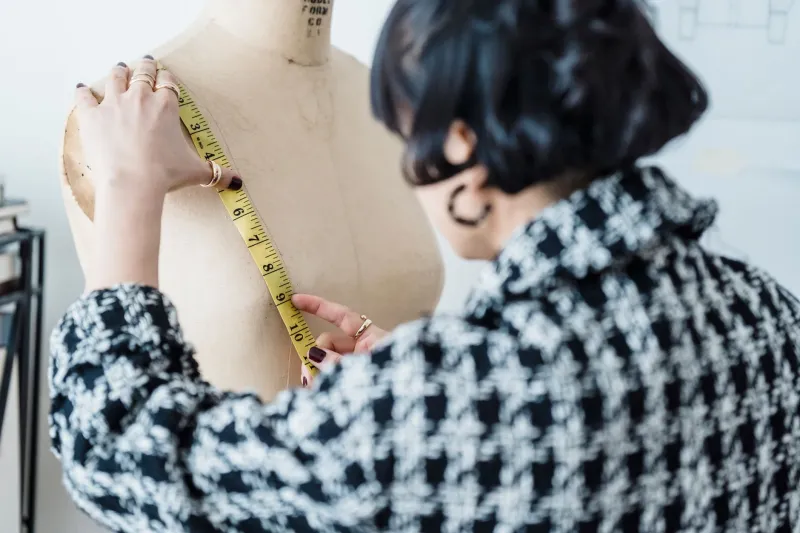
The pattern drafted for a couture gown is not a reusable asset. It fits one body, follows one set of proportions, and is generally retired once the wedding is over. That drafting time — hours at a table with paper, ruler, and a set of measurements taken in a fitting room — is embedded in the price and appears nowhere in the finished object.
What the Tag Does Not Include
Brides are consistently surprised by what sits outside the commission. Alterations after delivery, professional pressing and steaming, a bustle built as a separate charge, garment bags, insured shipping, and any post-wedding preservation are frequently quoted separately. Ask for the out-the-door number, not the commission number, and ask it in writing.
Six Questions to Ask Before You Sign
- How many yards of my chosen cloth are in this estimate, and what does the mill charge for it?
- How many fittings does this price assume, and what is the rate for additional sessions?
- Which parts of this gown are finished by hand, specifically?
- Is the bustle included, and is it built during fittings or after delivery?
- What is the delivery date, and what is the contingency if fabric arrives late?
- If my measurements change substantially, what is the process and the cost?
Where More Money Genuinely Changes the Dress
A larger budget improves a gown in four places, reliably. Better cloth, which drapes and photographs differently. More hand-finishing, which affects how a gown moves and how it feels against the body. Additional fittings, which refine fit in increments a single session cannot reach. And structure — the internal corselet, boning, and weighting that allow a heavy skirt to hang without dragging at the waist.
Where It Does Not
It does not improve a gown to add beadwork without a design reason. It does not improve a gown to import a label rather than a cloth. And it does not improve a gown to compress the timeline; a rushed couture commission costs more and delivers less, because the hours that make a gown are not compressible without consequence.
The Honest Arithmetic
A couture gown is expensive because it is made once, slowly, by people who are paid for their hours. Brides who understand the ledger tend to make better decisions inside it — and to feel considerably calmer when the invoice arrives, because nothing on it is a surprise.