The Dress That Waited: When the Honeymoon Phase With Your Gown Ends Before the Wedding Does

Photo: Basher Eyre, CC BY-SA 2.0, via Wikimedia Commons
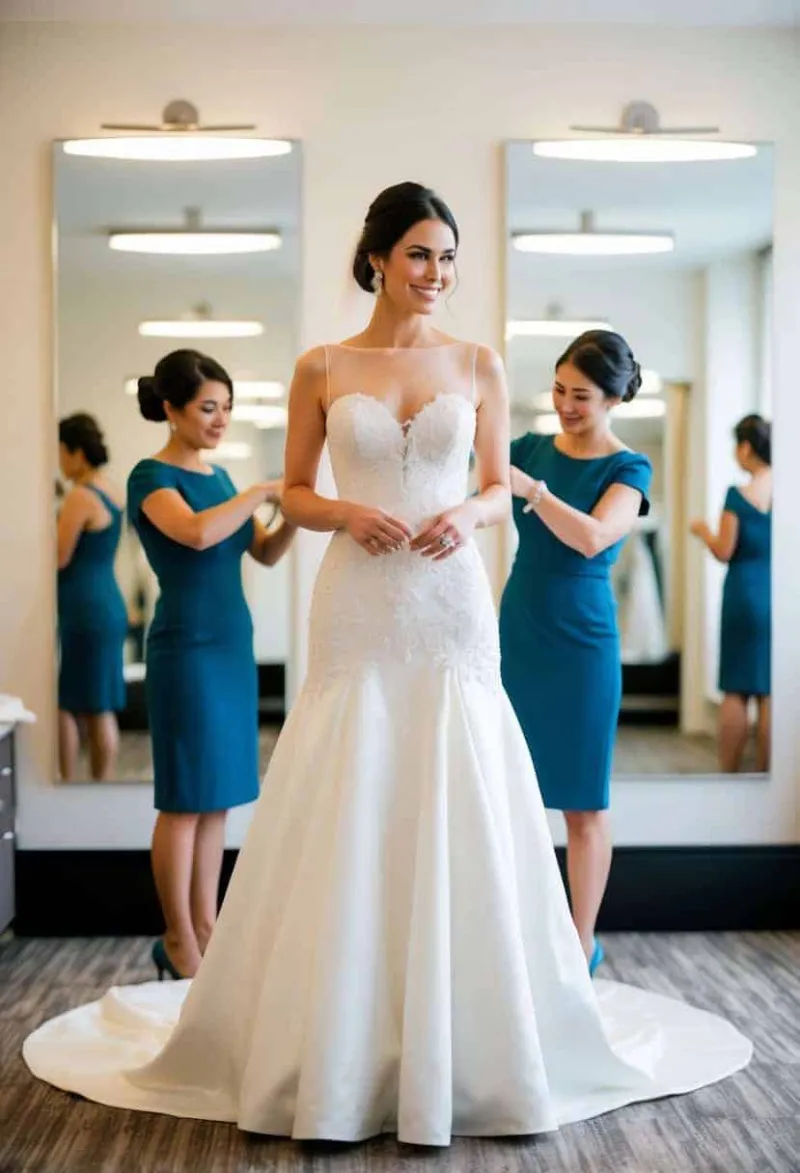
There is a moment every bride remembers: the one where she catches her reflection in a three-way mirror, hands flying to her mouth, and the room erupts. It is the moment we live for at Mia Bridal Couture, and it is genuine — the tears, the gasps, the mother quietly dabbing her eyes in the corner. What nobody tells you is what happens four months later, when the gown is hanging in a garment bag in a guest room in Ohio or Georgia or Arizona, and the bride walks past it without feeling much of anything at all.
We call it the second fitting slump, and if it has happened to you, we want you to know two things: you are not alone, and your dress is not the problem.
The Anatomy of the Dip
The emotional arc of bridal gown ownership is remarkably consistent. There is the search — the whirlwind of salon appointments, the Pinterest boards, the opinions of everyone you have ever met. Then comes the purchase, an adrenaline-soaked high that can last weeks. And then, inevitably, the plateau.
Part of this is simple psychology. A gown purchased twelve months before the wedding exists in a strange liminal state: too important to think about casually, too far away to feel urgent. Brides describe opening the closet, glancing at the bag, and feeling — nothing. Some describe something worse: a flicker of doubt. Did I choose right? Was I swept up? Would I pick something different today?
The timing is rarely accidental. The slump tends to arrive alongside wedding planning fatigue, when the spreadsheet has replaced the daydream and the guest list has become a battlefield of plus-ones. The gown, once a symbol of joy, quietly absorbs the stress of everything else.
What Our Stylists See From the Other Side of the Curtain
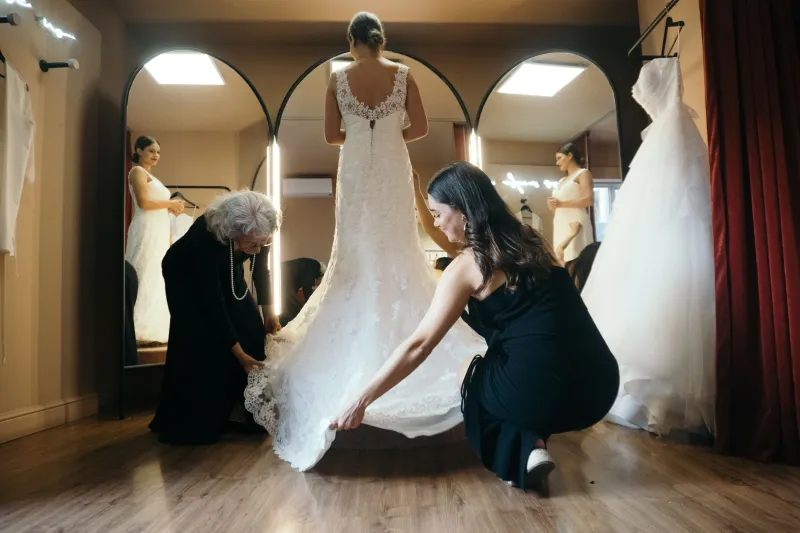
In our fitting rooms, we have learned to recognize the slump before a bride names it. She arrives at her second appointment quieter. She looks at the gown the way one looks at a decision already made rather than a dream coming true.
Our response is never to rush her back to the racks. Instead, we reframe. We ask her to bring the accessories she has been collecting — the earrings from her fiancé, the veil she impulse-bought in Nashville, her grandmother's bracelet. Styling is often the key that unlocks feeling again. A gown seen in isolation is fabric; a gown seen complete, with the details of her actual life attached to it, becomes a look, a moment, a story.
Sometimes we adjust the plan itself. A bride who chose a minimalist silk column may have changed in the intervening months — grown bolder, or softer, or simply tired of playing it safe. A change of neckline beading, an added sleeve, a dramatic cathedral veil introduced at the second fitting: these small interventions have rescued more gowns than we can count.
Real Brides, Real Recoveries
One of our brides, married last autumn in Charleston, confessed at her second fitting that she had considered selling her gown online. What she had actually fallen out of love with, it turned out, was the wedding — the 150-person reception her family had ballooned around her. Once she and her stylist talked it through, she asked for one change: detachable tulle sleeves, so the dress could feel like the intimate garden ceremony she now wanted. She cried at her final fitting. The dress had not changed. Her ownership of it had.
Another bride, a second-time bride from Denver, told us the slump hit hardest because her first wedding's dress had been chosen in a rush, and she was terrified of repeating the mistake. Naming that fear — out loud, in the fitting room — dissolved it. The gown she had chosen deliberately, slowly, was nothing like the one from before.
When to Trust the Slump — and When to Override It
We will be honest: occasionally, the doubt is real, and a bride genuinely needs a different gown. But in our experience, that is the rare exception. More often, the slump is a signal not about the dress but about the season of planning you are in. Ask yourself: when you imagine the moment you walk toward your partner, do you picture the gown? If the answer is yes — even faintly — the feeling is still in there. It is simply buried under cake tastings and seating charts.
Give yourself permission to step away. Do not visit the closet for three weeks. Then return, put the dress on with the shoes and the veil, and play the song you plan to walk down the aisle to. Nearly every bride who does this reports the same thing: the spark comes back, and often stronger, because this time it is rooted not in the thrill of the chase but in the reality of what is coming.
The gown has been waiting patiently all along. It is not offended by the silence. It is simply holding its place — at the center of a day that is closer than it feels.