When Doubt Creeps In: Surviving the Quiet Middle Months of Your Bridal Gown Journey
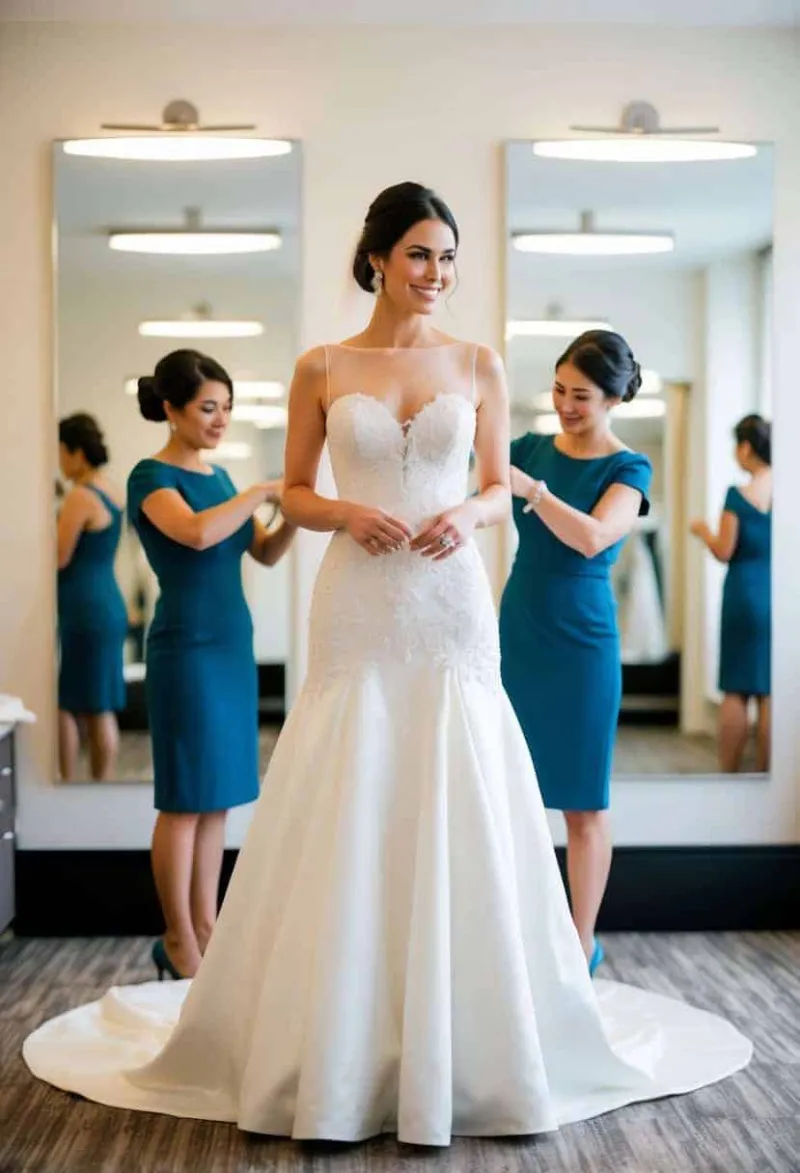
Photo: bride second fitting couture gown pins tailor atelier mirror, via omghitched.com
There is a moment every atelier knows well, even if no bride ever puts it in her planning binder. It arrives somewhere between the second and third fitting, when the initial thrill of the purchase has faded, the wedding is suddenly real and close, and the gown — still in progress, still unfinished — looks more like fabric and pins than the dress of her dreams.
We call it the second fitting slump. And if it happens to you, you are in very good company.
The Dip Nobody Photographs
Bridal culture in the United States is built around two high points: the emotional yes in the salon, often captured on video and shared with a group chat within minutes, and the triumphant final fitting, when the bride steps out fully styled and glowing. What falls between those moments is a long, quiet valley — and it is where most gown-related anxiety lives.
The reasons are rarely about the dress itself. Bodies change as weddings approach, sometimes in ways no one can predict. Stress from planning a wedding — especially the large, family-heavy celebrations so common in American bridal culture — leaks into every mirror moment. And social media delivers a relentless stream of other brides, other gowns, other silhouettes, each one a small invitation to second-guess a decision made months earlier.
"A bride will walk in and say, 'I don't love it anymore,'" says a veteran fitter we spoke with at a Midwest couture atelier. "Nine times out of ten, she still loves the dress. She's overwhelmed, she's tired, and she's comparing an unfinished garment to a fully styled fantasy. My job is to slow everything down."
Why the Middle Feels So Heavy
Part of the slump is simply psychological. Choosing a gown is one of the few purchases an American bride makes more than a year before she uses it. Living with a decision that long — especially one this emotionally loaded — almost guarantees a wobble.
There is also a practical dimension. Second fittings happen when gowns are pinned, basted, and deliberately imperfect. Sleeves may be provisional. Hems may be chalked. A bodice that will eventually be boned and supported can look limp on a hanger. Brides who expect magic are shown a work in progress, and the gap between expectation and reality can feel like disappointment — even when the trajectory is exactly on schedule.
Add in the body changes that so often accompany the pre-wedding season — a new fitness routine, stress-related shifts, or simply the passage of time — and it is easy to see why the middle months feel fraught.
What Fitters Wish Brides Knew
Every tailor and fitter we spoke with offered versions of the same advice: say the quiet part out loud.
"The worst thing a bride can do is go home and stew," one New York-based tailor told us. "Tell us exactly what feels wrong. Is it the neckline? The way the skirt moves? How you felt that morning? We can only fix what we know about."
Fitters suggest arriving at fittings prepared:
- Bring your actual wedding-day undergarments and shoes. Half of all fit concerns dissolve once the real foundation pieces are in place.
- Name the feeling, not just the flaw. "I feel frumpy in this" gives your atelier far more to work with than "I don't know."
- Ask to see the plan. A good atelier can walk you through every remaining step, which turns vague anxiety into a concrete schedule.
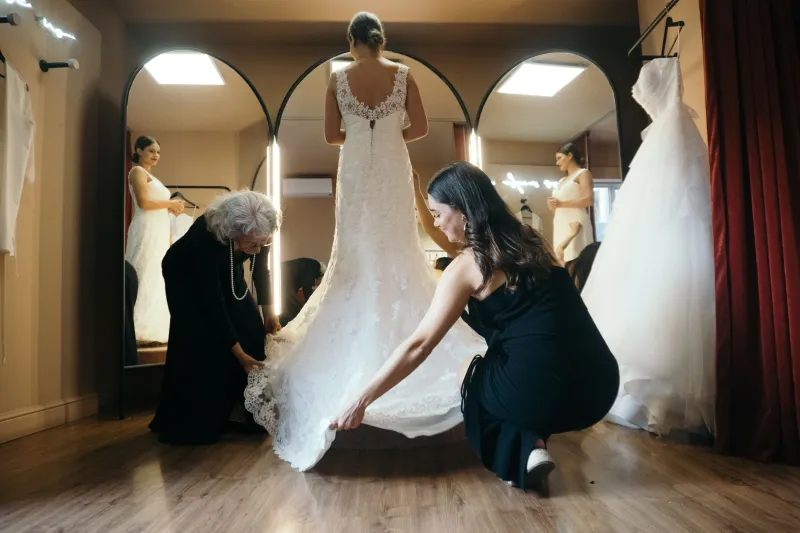
- Limit the audience. A fitting is not a performance. Many brides find that bringing one trusted person — rather than a crowd — makes honest conversation easier.
Fixable Doubt or Genuine Red Flag?
Not every doubt is a slump, and part of being an informed bride is knowing the difference.
Usually fixable: concerns about fit, hem length, strap placement, bustle style, veil pairing, or how the gown photographs. These are the bread and butter of any competent atelier, and most can be adjusted even late in the process.
Worth a serious conversation: a reaction to the silhouette itself, discomfort with the formality level, or a persistent feeling that the gown doesn't reflect who you are. These conversations are harder — but a reputable couture house would rather have them at the second fitting than hear silence until the final week. Options like restyling, swapping a veil for a bolero, or in rare cases revisiting the design are more available than most brides assume.
True red flags are rare — but they include an atelier that dismisses your concerns outright, cannot explain the remaining timeline, or refuses to document agreed-upon changes in writing. A professional will welcome your questions, not bristle at them.
The Other Side of the Slump
Ask brides who made it through, and a pattern emerges: the doubt almost always lifted at the final fitting, when the gown was finished, steamed, and paired with the right accessories. "I genuinely almost called to cancel at month five," one bride from North Carolina told us. "Then I put the whole look on — earrings, shoes, veil — and I cried. It was the dress the entire time. I just couldn't see it through the pins."
The lesson, fitters say, is one of trust: trust in the process, trust in the professionals you chose, and trust in the version of yourself who said yes in the first place. She knew what she was doing. The middle months just make it hard to remember.
If you find yourself in the slump this season, take heart. It is not a sign you chose wrong. It is a sign you care — and caring, in the hands of a good atelier, is exactly what makes the final fitting worth waiting for.