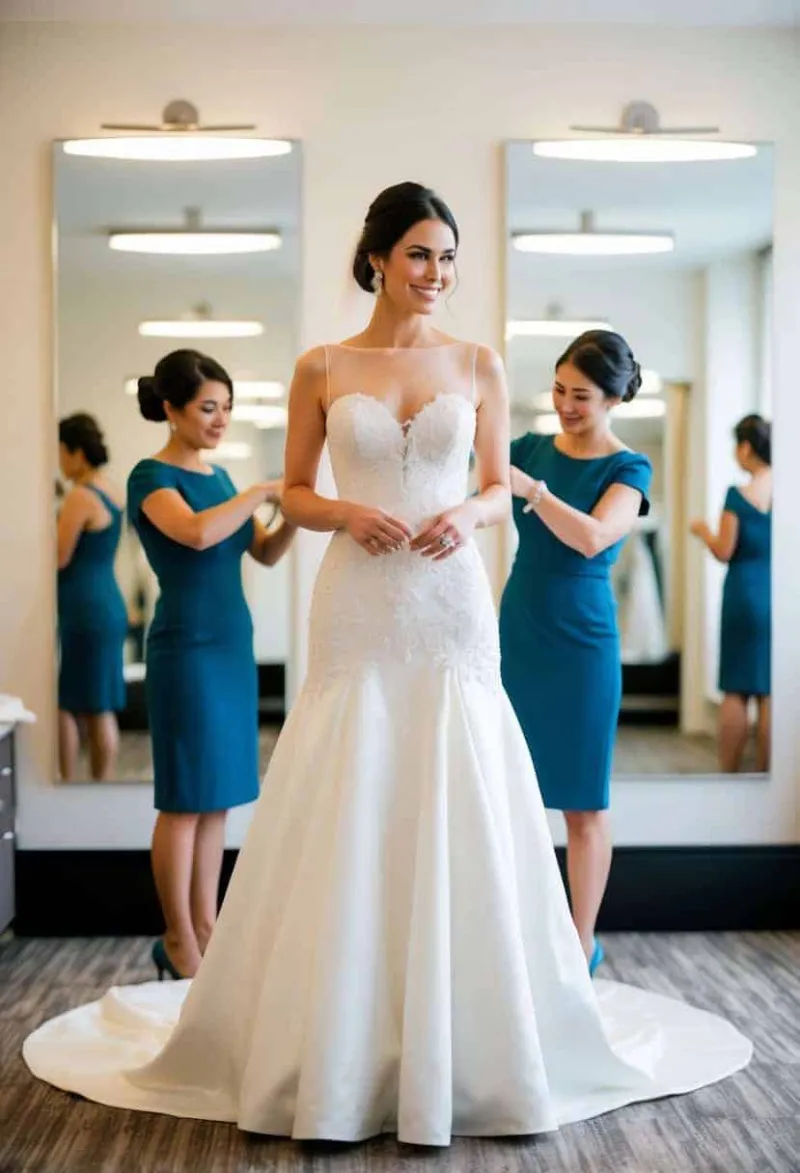
Behind the Closed Door: Should Your Groom Still Be Shut Out of the Fitting Room?
A Rule Older Than the White Dress Itself
Few bridal customs are observed as faithfully in America as this one: the groom does not see the gown before the wedding day. It predates the first look, the unplugged ceremony, and even the white gown's own dominance in American closets. And yet, at Mia Bridal Couture, we are increasingly finding ourselves in the middle of a quiet negotiation happening in our own fitting rooms — one between brides, their grooms, and a tradition that refuses to die gracefully.
The question surfacing more often each season is simple to ask and surprisingly difficult to answer: does the surprise still matter?
When the Rule Begins to Bend
Ask ten consultants in the bridal industry and you will hear ten variations of the same story. A bride books an appointment, brings her fiancé "just for the drive." He waits in the car. Then he doesn't. Then he's offering an opinion on a Mikado skirt through a half-opened fitting room door.
One couple we worked with in Chicago handled it with unusual candor. The groom, a textile buyer by trade, had strong opinions about fabric weight. The bride admitted she wanted his eye. Together they compromised: he accompanied her to a fabric appointment but signed a formal promise not to attend a single fitting. He saw swatches, never silhouettes. On the wedding day, she says, he still gasped.
Another couple in Austin took the opposite route entirely — he sat through every appointment, notebook in hand. Their consultant describes the experience as "exhausting and wonderful in equal measure." The bride, reflecting on it afterward, said the gown felt less like a reveal and more like a collaboration she got to wear.
What Consultants See From the Middle
Bridal consultants occupy an awkward position in this debate. They are custodians of the surprise and, simultaneously, hosts to whoever walks through the door.
Most will tell you the traditional reveal remains the emotional centerpiece of the appointment-to-aisle arc. There is a reason the first moment a groom sees his bride in the gown is planned, photographed, and often the single most-replayed clip from the wedding video. Anticipation does real work.
But consultants also notice something else: brides who involve their grooms early tend to be more decisive. The endless second-guessing that plagues many gown journeys — the doubt, the returning to the atelier, the quiet middle months of regret — seems, anecdotally at least, to visit collaborative couples less often. Whether that is because of the involvement or because collaborative couples simply communicate differently, no one can say with certainty.
The Middle Ground We Recommend
If you are torn, consider what the surprise is actually protecting. For most couples, it is not the gown itself but the moment — that first look at the altar or the first-look portrait an hour before. That moment survives a surprising amount of information sharing.
A few approaches that preserve the magic while honoring modern partnership:
- Fabric, not form. Share swatches, mood boards, and inspiration. Keep silhouettes secret.
- The witness rule. Allow him to attend one appointment as an observer, with the understanding that the final choice is yours alone.
- The reveal rehearsal. Some couples schedule a private first look days before the wedding, reserving the public reveal for the ceremony. The groom sees the dress; the guests do not.
Our Verdict
Tradition earns its keep when it serves the couple, not when the couple serves it. The surprise reveal is a beautiful thing, and we will never tire of witnessing one. But a gown chosen with full knowledge of the person who will see you wear it is not a lesser gown. It is, in some cases, a more honest one.
Whatever you decide, decide it together — and then close the fitting room door on everyone else.