Bustled, Basted, and Barely There: The Truth About What Each Fitting Reveals
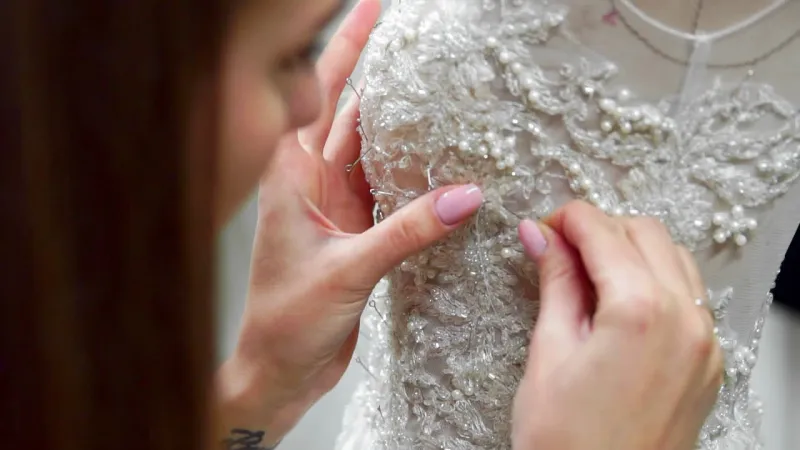
Photo: bride second fitting couture wedding gown pins unfinished atelier, via videocdn.cdnpk.net
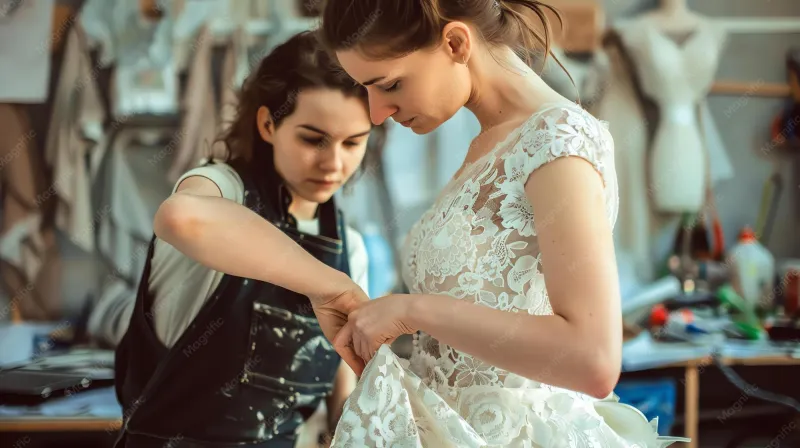
There is a moment we witness at Mia Bridal Couture more often than any other: a bride standing on the fitting pedestal, arms slightly raised, staring at a gown that looks — to her untrained but entirely reasonable eye — unfinished. Because it is. The hem is chalk-marked and pinned. The bodice is basted together with white thread that will vanish later. A seam of raw silk runs along one side where the panels are still being coaxed into alignment.
She smiles politely. She says it's beautiful. And then she gets in her car and texts her maid of honor that she isn't sure anymore.
This article exists to prevent that text.
The Myth of the Magical Second Look
Popular culture has done brides a disservice by collapsing the entire gown-making process into a single triumphant mirror moment. In reality, a bespoke or couture gown is built in stages, and each fitting serves a distinct technical purpose — not an emotional one. Understanding what each appointment is actually for is the difference between unnecessary doubt and informed patience.
Here is the honest timeline, from our atelier floor to yours.
Fitting One: The Foundation Muslin
The first fitting typically happens eight to ten months before the wedding, and it is almost always done in a plain cotton muslin — not the final fabric. This surprises many first-time couture clients, but there is sound reasoning behind it. Muslin behaves predictably, records every pin and tuck, and allows the pattern cutter to shape the gown to your actual body rather than a standard size chart.
What you should evaluate at this appointment: the silhouette, the neckline, the placement of the waist seam, and how the overall proportion sits on your frame. What you should not evaluate: how you feel in it. Muslin is a draft, not a dress. It has no drape, no movement, no romance. Brides who fall in love at fitting one are falling in love with a sketch they can stand inside.
Fitting Two: The One That Breaks Hearts
By the second fitting — usually around month six or seven — the gown exists in its true fabric, and this is precisely where expectations collide with reality. At this stage, the gown is deliberately overbuilt. Seam allowances are generous. The hem is unfinished. Closures may be held with temporary basting. Sleeves, if there are any, are often pinned rather than set.
A gown at the second stage of construction is a work in progress the way a house with exposed wiring is a home. It is structurally further along, but aesthetically further behind than the muslin was, because now every imperfection is visible in expensive fabric.
There is a technical reason for this, too. Couturiers build in extra at the second fitting because the third fitting will remove it. The gown needs to be taken apart, refined at the seams, and reassembled between appointments two and three. If it fit perfectly at fitting two, there would be nothing left to do but hope your body never changes — and bodies, as we have written before, rarely honor their appointments.
If you feel underwhelmed at fitting two, you are reading an accurate signal about the wrong thing. The gown is not the finished thought. Speak up, by all means — this is the ideal moment to request adjustments to the neckline depth or the bustle placement — but do not mistake construction for conclusion.
Fitting Three: Where the Dress Actually Happens
Then comes the third fitting, typically four to eight weeks before the wedding, and everything changes. The seams have been opened, refined, and closed permanently. The hem has been finished with the correct hem tape for the fabric — a horsehair braid for tulle, a hand-caught roll for silk mikado. The closures are real. The bustle is engineered and tested, often with whoever will be doing the bustling on the wedding day invited to learn it.
This is the appointment where brides cry. Not because of sentiment alone, but because the gown finally matches the picture that has lived in their head since the day they said yes to it. The third fitting is the first time the dress exists as a dress rather than a process.
It is also the first fitting where you should wear the actual shoes, the actual undergarments, and ideally the actual veil. Proportions shift with a two-inch heel and a cathedral-length veil in ways that no amount of pinning can predict.
When to Speak Up — and When to Wait
A simple rule from our fitting rooms: at fitting one, speak up about design. At fitting two, speak up about fit and structure. At fitting three, speak up about nothing except comfort — can you sit, hug, raise a toast, and survive the electric slide?
If something feels wrong at the second fitting, say so in detail rather than in generalities. "I don't like it" gives your fitter nothing to work with; "the shoulder seams feel like they're pulling forward" gives them everything. Our seamstresses can solve nearly any technical problem raised at fitting two. What they cannot solve is a problem raised for the first time at fitting three, when the seams are closed and the clock is short.
Trust the Middle
The unglamorous truth of couture is that the middle of the process is designed to look wrong. Your gown, at its second fitting, is doing exactly what it should — being unfinished, on purpose, on schedule.
So if you have a second fitting on the calendar and you're bracing for disappointment, reframe it instead: this is the appointment where your feedback has the most power. And the one after it? That's where the magic has been hiding all along.