The Quiet Cost of Saying Yes to the Dress You Didn't Choose: Bridesmaids and the New Couture Standard
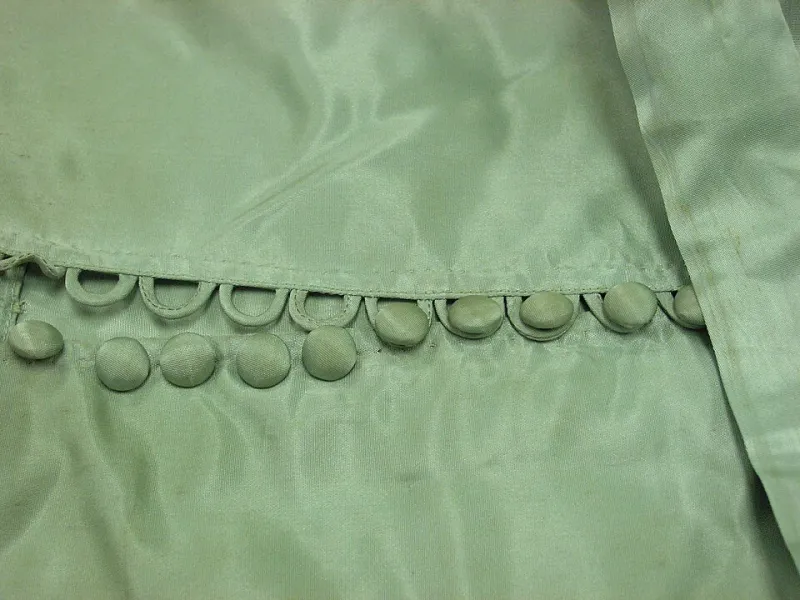
Photo: Unknown authorUnknown author, CC BY 4.0, via Wikimedia Commons
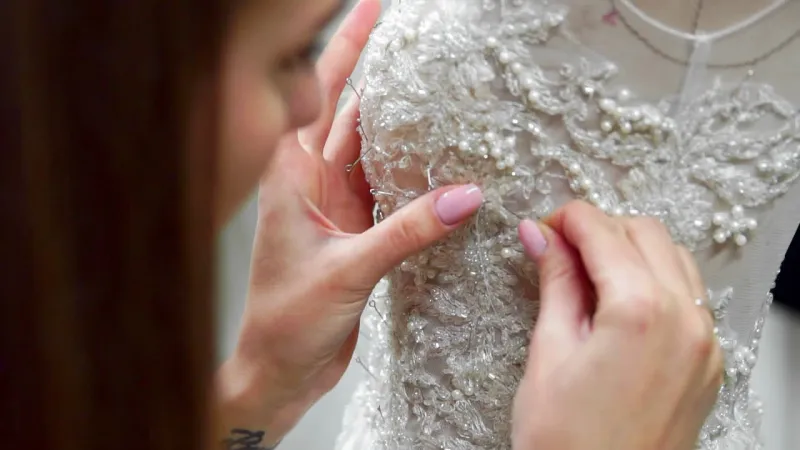
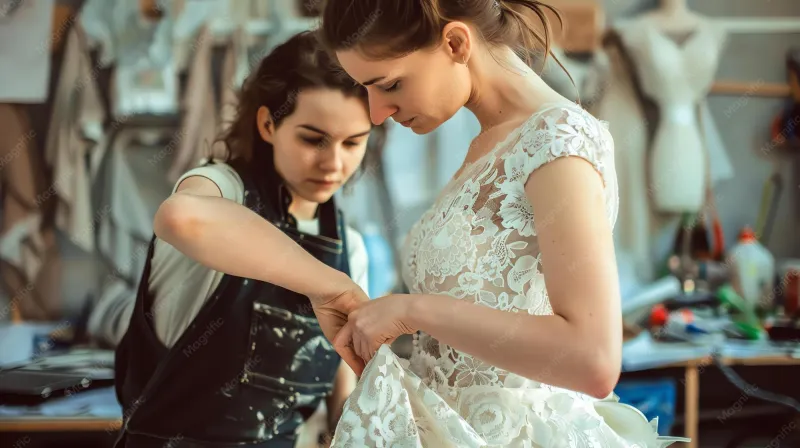
At Mia Bridal Couture, the bride's gown is the star of every fitting. But pull back the curtain an inch and you will notice a second production unfolding in the background: a rack of bridesmaid dresses, each one dyed to order, hemmed to measure, and priced far closer to the atelier than to the department store.
The bridal party wardrobe has changed. What was once a one-size-fits-most order from a national retailer has become, for many American weddings, a made-to-measure project with couture-adjacent expectations. And with that shift comes a set of questions no one likes to raise out loud: What does it cost, who absorbs it, and does any of it actually matter on the day?
The Price of Looking Cohesive
A custom-dyed chiffon gown from a bridal salon routinely runs between $250 and $450 before alterations. Add made-to-measure adjustments, a steaming fee, and shipping, and a single bridesmaid can easily cross the $600 mark. Multiply by seven attendants and the bridal party wardrobe rivals the cost of the photographer.
This is not necessarily extravagance. Made-to-measure construction solves real problems: mismatched dye lots, hems that float above the ankle, bodices that gap across the back. When a bridal party spans sizes 0 to 24, ordering from a single size chart is a recipe for disappointment. The atelier approach, however imperfect, treats every attendant as a body to be fitted rather than a number to be matched.
But someone is paying for that treatment, and the answer is almost always the attendants themselves.
The Etiquette of the Invoice
American tradition holds that bridesmaids cover their own dresses. That convention made sense when the dress was a $120 purchase from a mall retailer. It strains under a $500 made-to-order gown chosen without a vote.
The graceful path is transparency, delivered early. A bride who wants couture-level garments owes her attendants a frank conversation: the expected cost, the timeline, the alteration process, and — crucially — permission to decline without penalty. A guest room offered for the wedding weekend, or a genuine contribution toward a gown someone could never wear again, goes further than any gift box of jewelry.
Bridesmaids, for their part, owe honesty in return. Silence about a strain on the budget curdles into resentment by the reception. A private, early conversation — "I can do $250, not $600" — is not an attack on the wedding. It is information a thoughtful bride can use.
Flattering Every Body Without Pretending Differences Don't Exist
The old solution — identical dresses in identical colors — has been losing ground for a decade, and rightly so. The mix-and-match approach, in which attendants share a palette and a fabric but choose their own necklines, has proven itself in salons across the country. It photographs beautifully because it reads as intentional, and it works because it acknowledges what sizing charts refuse to: bodies differ.
Three principles serve any bridal party well:
- Fix the fabric, free the silhouette. A single dye lot in a matte crepe or silk mikado unifies the group even when every bodice differs.
- Put structure where it counts. Wrap bodices, bias-cut skirts, and adjustable straps accommodate change — including the changes of a pregnancy or a fitness journey between ordering and wedding day.
- Fit once, late. Schedule final alterations four to six weeks out, not four months. Bodies and stress levels both fluctuate.
When Matching Actually Matters
There are moments when uniformity earns its price. A formal church ceremony with a processional order, a black-tie ballroom reception, or a family with strong photographic traditions may genuinely call for identical gowns. In those cases, the couture approach justifies itself: one silhouette, cut individually for each wearer, produces the visual harmony of matching without the visual casualties of off-the-rack sizing.
The mistake is treating matching as a moral requirement rather than an aesthetic choice. No guest at a wedding in Charleston or Chicago has ever noticed whether the bridesmaids' necklines were identical. They notice whether the group looks comfortable, confident, and glad to be there.
The Long View
Here is the quiet irony of the couture bridesmaid gown: it may be the version of the dress most likely to be kept. A garment cut to the wearer's measurements, in a fabric with real weight and a color chosen with care, has a life beyond the wedding — re-dyed, re-tailored, worn again to galas and garden parties.
That does not erase the cost, and it should never be used to justify it. But it reframes the conversation. The question is not simply "What does this dress cost?" but "What is this dress worth — to the wedding, and to the woman wearing it?" Answer both honestly, and the bridal party wardrobe becomes what it should be: not a burden carried in silence, but a shared investment in a day everyone helped create.