Miles and Mikado: Getting a Couture Gown Across the Country in One Piece
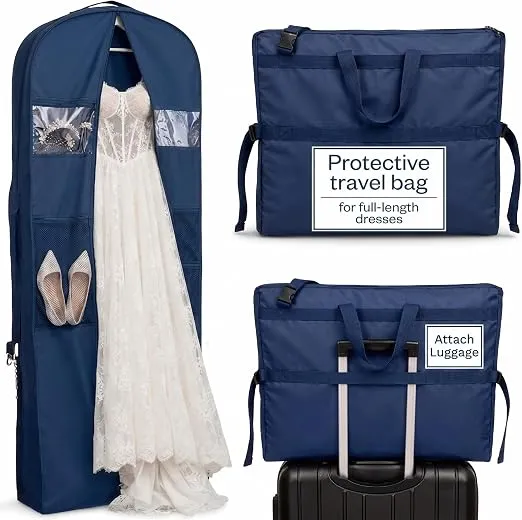
Photo: bride carrying garment bag wedding dress at airport traveling with gown, via m.media-amazon.com
The gown was perfect. The problem was 2,500 miles of it between the boutique in Dallas and a clifftop ceremony in Maui. Heavy silk mikado, a hand-draped bodice, a train that demanded its own garment bag — and a bride with a connecting flight through Phoenix and a forecast that promised island humidity.
This is the unglamorous side of the destination wedding, and it deserves the same planning as the flowers, the band, and the guest list. Having shepherded gowns to Aspen, Charleston, Nantucket, and beyond, we have learned what works — and what turns a dream dress into a crisis call at midnight.
Book the Gown's Flight Before Yours
Airlines are inconsistent about bridal wear, so assume nothing. Most U.S. carriers will allow a garment bag as a carry-on if it fits the sizer, and flight attendants will often hang a wedding gown in a first-class or bulkhead closet as a courtesy — but courtesy is not policy. Call the airline directly after booking, note the agent's name, and ask specifically about closet availability on your aircraft type. A regional jet to a smaller destination airport may have no closet at all.
If the gown cannot fly as a carry-on, two options remain: check it in a hard-sided suitcase lined with the boutique's packing tissue, or ship it via a white-glove courier service that specializes in wedding attire. For gowns above roughly $8,000, we recommend the courier. Insure it for full replacement value and confirm the delivery window against your arrival — never ship a gown to arrive the day before the wedding.
Pack Like an Atelier, Not a Tourist
The single most important packing decision is the fold. Structured gowns — mikado, duchess satin, anything with boning — should travel on their strongest seam lines, folded once at the natural waist if possible. Delicate layers of silk chiffon or tulle should be stuffed gently with acid-free tissue to prevent sharp creases.
Our salon's packing sequence, refined over dozens of destination weddings:
- Steam or press the gown at the boutique before packing — never assume your venue will have adequate equipment.
- Pad the bodice with tissue; place the veil in its own bag, separate from the gown.
- Fold along seams, tissue between every layer, and roll rather than crease any full-skirted sections.
- Bag it in breathable cotton — never plastic, which traps moisture and yellows embellishment.
The Steaming Situation
Every destination bride should assume the gown will arrive wrinkled, because it almost always does. Research your venue's resources six weeks out: does the hotel offer a steamer, and is it working? Will the wedding planner have a professional on call? In resort towns like Aspen or Maui, steamer rentals and press services exist but book up in peak season.
The travel hack our stylists swear by: hang the gown in the bathroom while you take a hot shower. Twenty minutes of steam loosens most travel creases in lightweight fabrics. For heavier materials, a handheld steamer with a pressing cloth is worth the suitcase space. And never, under any circumstances, iron beading or lace directly.
The Case for the Duplicate Veil
Veils are the most lost, torn, and forgotten bridal item in the travel equation. They snag on zippers, vanish into hotel laundry, and blow off clifftops with impressive enthusiasm. Our advice is blunt: if your budget allows, purchase or commission a simple travel duplicate — a plain tulle veil in a matching length — and reserve the heirloom or embellished version for the ceremony itself, hand-carried, never checked.
A duplicate veil costs a fraction of a gown and has saved more weddings than any other single item on our list.
The Six-Week Checklist
Run through this list six weeks before departure, not the night before:
- Confirm the gown's final fitting and schedule a pre-travel pressing at the boutique.
- Call your airline about garment closet availability; document the answer.
- Reserve a steamer or pressing service at your destination.
- Verify wedding-day insurance covers the gown in transit.
- Pack an emergency kit: needle and clear thread, spare buttons, fashion tape, tissue, a travel steamer.
- Confirm who is responsible for the gown at the venue — planner, maid of honor, or you — and put it in writing.
- Photograph the gown, inside and out, and save the photos to your phone and the cloud.
Arrive Early, Walk Late
Finally, the golden rule: the gown arrives at least two days before the ceremony, ideally three. That buffer absorbs a lost bag, a delayed flight, or a stubborn crease in a beadwork panel. The dress should be hung, steamed, and photographed before the rehearsal dinner — so that on the day itself, the only thing left to think about is the walk.


