Twenty Minutes at the Counter, a Lifetime in the Photographs: Couture for the Courthouse Bride

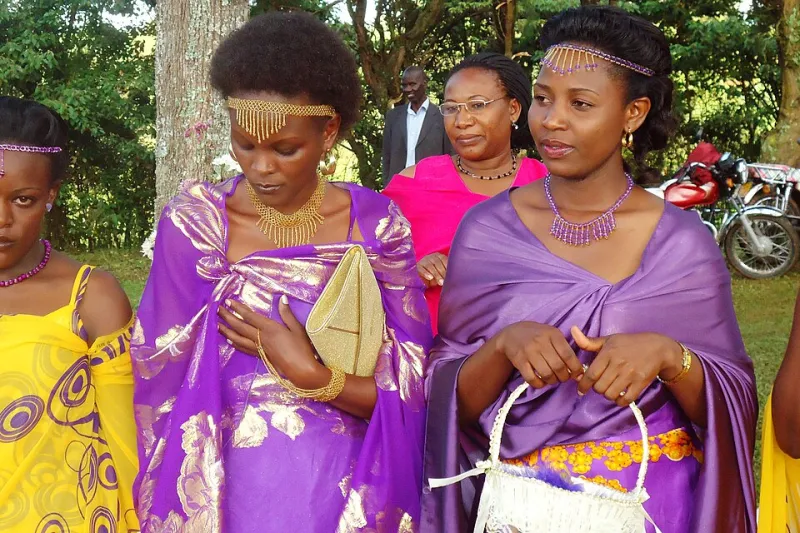
Photo: Betty Longbottom, CC BY-SA 2.0, via Wikimedia Commons
There is a particular kind of confidence required to stand before a clerk's window in a gown that took ninety hours to make. Across the United States, that confidence is multiplying. Courthouse ceremonies, city hall elopements, and micro-weddings under twenty guests have moved from the margins to the mainstream — and the brides choosing them are not dressing down. They are dressing differently.
At our atelier, the requests have shifted in tone over the past few seasons. Fewer questions about cathedral trains, more about whether a bias-cut skirt can survive four hours of walking through the West Village. Fewer veils, more statement backs. The courthouse bride is not a lesser version of the traditional one; she is a brief of her own, and it deserves its own design philosophy.
The Architecture of a Short Ceremony
A courthouse wedding compresses the ritual into a fraction of the time. There is no processional to build anticipation, no long nave in which the silhouette can be read from a distance. What replaces it is proximity: a handful of witnesses standing close, a photographer working a small room, and often a city waiting outside.
That proximity changes everything about construction. Detail that would be lost from fifty pews away — a hand-rolled button, a scalloped edge of lace at the cuff, the texture of a raw-hemmed flounce — becomes the entire show. We steer these brides toward pieces that reward closeness: matte silk crepe with a single dramatic drape, or a column in duchess satin where the only ornament is the cut itself.
The Back Is the Front
If there is one design rule for the city hall wedding, it is this: the photographs will be taken from behind. Brides lean on railings, sign documents, climb courthouse steps, and pose against columns and revolving doors. A dramatic back — an open V framed by covered buttons, a cowl of liquid charmeuse, a corset-laced panel — works harder in a courthouse gallery than any train ever could.
Several of our recent bespoke commissions were designed almost in reverse: the client and her photographer chose the backdrop first, and we built the gown's rear architecture to answer it. A bride marrying at San Francisco City Hall wanted her open-back gown to echo the rotunda's geometry; the result was a sculpted, arch-shaped cutout that read almost architectural in photographs.
Fabrics That Travel
The courthouse wedding rarely ends at the courthouse. These are full-day affairs — brunch with parents, a walk through a favorite neighborhood, dinner at a restaurant where the bride is the only one in ivory. The gown must perform for eight hours, not twenty minutes.
That argues for:
- Silk crepe and mikado — structured enough to resist wrinkling in a rideshare, matte enough to photograph cleanly in daylight
- Minimal beading on contact zones — crystal work at the shoulders rather than the hips, where arms and handbags do their damage
- Detachable elements — a removable overskirt or bow that transforms the look between the ceremony and the evening
- A hem with intent — floor-length reads formal in photographs; a slight train, even eight inches, adds drama without becoming a street-sweeping liability
The Brides Who Went Small but Not Generic
We keep notes from our consultations, and one bride's comment from last spring has stayed with us. Marrying at a weekday ceremony in Lower Manhattan with six guests, she told us, "Nobody would have blinked if I'd worn a white slip dress. That's exactly why I didn't."
Her gown: a sleeveless column in ivory wool crepe — an unusual choice, chosen for the November chill — with a single sculptural fold across the back and her grandmother's pearl earrings as the only accessory. Total guest count, six. Total hours of handwork, seventy.
Another client, married at the county courthouse in Austin before a barbecue reception, chose a tea-length dress in heavy silk gazar with a bow the size of a throw pillow at the back waist. The shorter length was practical for Texas heat; the bow was pure theater for the photographs.
The common thread is refusal. These brides declined the assumption that a small ceremony requires a small gesture.
A Checklist for the Minimized Timeline
For brides planning a courthouse or city hall ceremony, we suggest evaluating every design decision against three questions:
- Does it photograph from behind? If the detail only lives on the front bodice, reconsider.
- Can it survive a day of movement? Sit, stand, walk a block, hug six people. Then judge.
- Does it need an aisle to make sense? A dramatic train often does; a sculptural back never does.
And one final note on timing: bespoke commissions still require lead time. A courthouse date may be chosen in six weeks, but a gown built to last a lifetime in the photographs should not be. Begin the conversation as soon as the license appointment is on the calendar.
Small Ceremony, Full Intention
The twenty-minute wedding strips away the pageantry and leaves only what the bride actually chose — and nothing makes that choice more visible than couture. When the room is small and the timeline is short, every stitch is a statement. We think that is not a compromise of the dream dress. It may be its purest expression.